
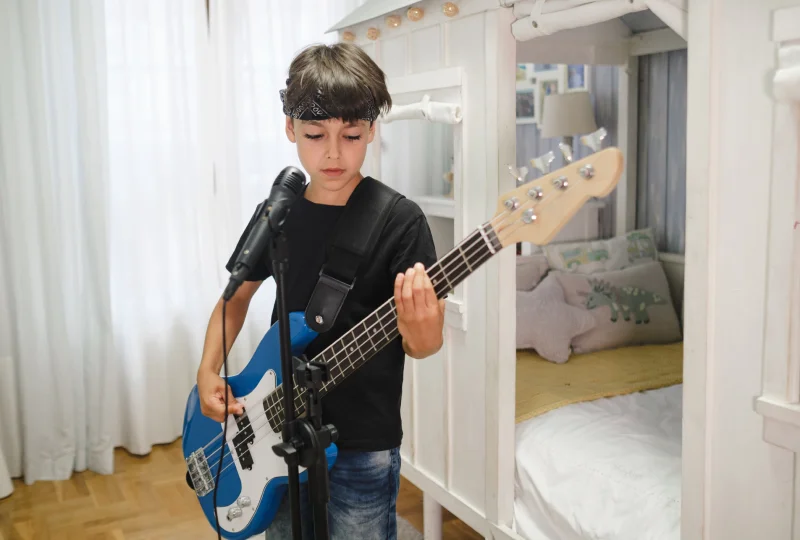
Bass Guitar Beginner Techniques: First Steps to Playing
Hello there! I’m Tim Cashman, and for nearly four decades, since 1986, I’ve had the immense pleasure of guiding students of all ages through their musical journeys right here at B Sharp Studio in West Seattle, WA. If you’ve ever felt the rumble of a bassline deep in your chest and thought, “I want to do that,” then you’ve come to the right place. Learning bass guitar is an incredibly rewarding experience, offering a unique blend of rhythmic drive and harmonic foundation that makes it the heartbeat of almost any band. Today, I want to walk you through some essential bass guitar beginner techniques, helping you take those exciting first steps into the world of low-end groove.
Whether you’re a child curious about music, a teenager looking to join a band, or an adult picking up an instrument later in life, the bass guitar offers a path to creative expression and a deep understanding of music. My approach at B Sharp Studio is always student-led, focusing on your goals in a low-pressure, encouraging environment. We’re located conveniently at Seattle, WA 98106, just 7 minutes from the West Seattle Bridge, and I’m always happy to chat about lessons at (206) 225-0212 or tim@bsharpstudio.com.
Why the Bass Guitar? The Foundation of Sound
Many aspiring musicians gravitate towards the guitar or drums, but the bass guitar holds a special, often understated, power. It bridges the gap between rhythm and harmony, providing the anchor that holds a song together. As a bassist, you’re not just playing notes; you’re creating the pulse, the feel, and the emotional weight of the music. It’s a truly foundational instrument, essential in genres from rock and pop to jazz, funk, and R&B.
Learning bass guitar develops a keen sense of rhythm, timing, and musicality. It teaches you to listen deeply and to understand how different instruments interact within an ensemble. Plus, bassists are always in demand! If you’re looking to join a band or simply enjoy the satisfaction of laying down a solid groove, diving into bass guitar for beginners is an excellent choice.
Your First Steps: What You’ll Need
Before we dive into the techniques, let’s ensure you have the right gear. Don’t worry, you don’t need the most expensive equipment to start.
- A Bass Guitar: Electric basses are most common for beginners. There are many affordable options available. Consider the scale length; shorter scale basses can be easier for smaller hands.
- An Amplifier: A small practice amp is perfect. It allows you to hear yourself clearly and get a feel for the instrument’s tone.
- A Cable: To connect your bass to your amp.
- A Tuner: Essential for ensuring your bass sounds correct. Digital tuners (clip-on or pedal) are readily available.
- A Strap: For playing while standing.
- Picks (Optional): Many bassists play fingerstyle, but some prefer a pick. Experiment to see what feels right for you.
- A Metronome: Crucial for developing precise timing. Many apps offer this feature.
I can help guide you through equipment choices during your first lessons, ensuring you get what you need without breaking the bank.
Posture and Holding Your Bass: Comfort and Control
Proper posture is paramount for comfort, preventing strain, and allowing your hands to move freely. Whether you’re sitting or standing, the principles are similar.
Sitting Down
When seated, rest the body of the bass on your right thigh (for right-handed players). The neck should be angled slightly upwards, making it easier to reach all the frets. Keep your back straight, shoulders relaxed, and avoid hunching over. Your left arm should be free to move along the neck without obstruction.
Standing Up
When standing, use a comfortable strap that distributes the bass’s weight evenly across your shoulder. Adjust the strap so the bass hangs at a height where you can comfortably reach the fretboard and pluck the strings without straining your wrists or shoulders. Generally, the bass should be around your waist level, similar to where it would rest if you were sitting.
In both positions, the goal is to keep your wrists relatively straight. Bending your wrists too sharply can lead to discomfort or even injury over time. This foundational step is often overlooked in basic bass guitar lessons but is critical for long-term enjoyment and progress.
Fretting Hand Techniques: Bringing Notes to Life
Your fretting hand (typically your left hand for right-handed players) is responsible for pressing down on the strings to produce different notes.
The “Spider” Hand Position
Imagine your hand as a spider, with each finger poised above a fret. Place your thumb on the back of the neck, roughly opposite your middle finger, for support. Your fingers should be curved, pressing down firmly with the tips of your fingers just behind the fret wire, not on top of it. This ensures a clear, ringing note without buzzing.
- Finger Placement: Use your index finger for the 1st fret, middle finger for the 2nd, ring finger for the 3rd, and pinky for the 4th (when playing chromatically). This “one finger per fret” approach is a cornerstone of good bass technique.
- Pressure: Press just hard enough to get a clear note. Too little pressure will cause buzzing; too much can lead to fatigue.
- Economy of Motion: Try to keep your fingers close to the fretboard even when not playing a note. This minimizes wasted movement and improves speed.
Plucking Hand Techniques: The Groove Engine
Your plucking hand (typically your right hand for right-handed players) is where the rhythm and tone truly come alive. There are two primary methods for beginners:
1. Fingerstyle
This is arguably the most common and versatile technique for bass. You’ll use your index and middle fingers (and sometimes your ring finger) to pluck the strings.
- Anchor Point: Many bassists rest their thumb on the pickup or the lowest string (E string) for stability.
- Alternating Fingers: Use your index and middle fingers in an alternating motion (e.g., index, middle, index, middle). This creates a consistent rhythm and allows for faster playing.
- Attack: Experiment with how much force you use to pluck. A lighter touch gives a smoother sound; a harder attack offers more punch.
- Rest Stroke: After plucking a string, let your finger rest on the adjacent lower string. This helps with muting and provides a stable base for the next pluck.
2. Using a Pick
Playing with a pick (or plectrum) can give a brighter, more aggressive tone, often favored in rock and punk genres. If you’re coming from guitar, this might feel more natural initially.
- Grip: Hold the pick firmly but not too tightly between your thumb and index finger.
- Angle: Angle the pick slightly so it glides across the string rather than snagging.
- Alternate Picking: Use consistent up-and-down strokes for smooth, even rhythm.
I encourage all my students to try both methods. Understanding how to use both fingerstyle and a pick will make you a more versatile bassist. Developing these beginner bass guitar exercises for both hands will build a strong foundation.
Muting Techniques: Clarity is Key
One of the hallmarks of a great bassist is clarity and control over unwanted string noise. Muting is essential.
- Fretting Hand Muting: Your fretting hand fingers, when not actively pressing a note, can lightly rest on adjacent strings to prevent them from ringing out.
- Plucking Hand Muting: Your plucking hand’s thumb or palm can be used to mute strings you’re not playing, especially the lower strings. The “rest stroke” mentioned earlier is a form of muting.
Mastering muting takes time and conscious effort, but it’s a critical skill for a clean, professional sound.
Your First Notes and Basic Scales
Once you’re comfortable with posture and hand positions, it’s time to make some music! I always start students with simple, foundational exercises.
The Open Strings
The standard tuning for a 4-string bass (from thickest to thinnest) is E-A-D-G. Practice plucking each open string clearly and consistently.
Chromatic Exercise
This exercise uses the “one finger per fret” technique and is fantastic for building finger strength, independence, and coordination. On the E string, play:
E (open) – F (1st fret, index) – F# (2nd fret, middle) – G (3rd fret, ring) – G# (4th fret, pinky).
Repeat this on each string, moving up and down the neck. This is a fundamental beginner bass guitar exercise.
The Major Scale
Learning the major scale is crucial for understanding harmony and constructing basslines. We’ll start with the C Major scale, as it has no sharps or flats, making it visually straightforward on the fretboard. Learning scales helps you understand the musical landscape, much like understanding grammar helps you write sentences. For example, some of my students enjoy playing along to songs like All Along the Watchtower, which can be broken down into simple scale and arpeggio patterns.
Rhythm and Timing: The Bassist’s Superpower
As a bassist, you are the timekeeper. A solid rhythmic foundation is more important than blazing speed. This is where your metronome becomes your best friend.
- Practice with a Metronome: Start slowly, playing whole notes, half notes, quarter notes, and then eighth notes to a click. Focus on hitting each note precisely on time.
- Feel the Groove: Listen to basslines in your favorite songs. Try to identify the rhythmic patterns and how the bass interacts with the drums.
- Subdivision: Practice counting subdivisions (1 & 2 & 3 & 4 &) to internalize the beat.
Developing a strong rhythmic sense is a journey, and it’s one we’ll explore together in depth during your lessons. The importance of rhythm in music is something I’ve emphasized throughout my nearly 40 years of teaching, from the Juneteenth 2025 album recordings to performances at the Fauntleroy Fall Festival 2025.
For more insights into the foundational role of rhythm and percussion in music education, you might explore resources from organizations dedicated to music pedagogy, such as the National Association for Music Education.
Practice Smart, Not Just Hard
Consistency beats intensity every time. Short, focused practice sessions are more effective than infrequent, long ones.
- Set Clear Goals: What do you want to achieve in this practice session? Learn a new riff? Master a scale?
- Warm-Up: Start with gentle exercises to get your fingers moving.
- Slow Down: If you can’t play it slowly, you can’t play it fast. Use your metronome to gradually increase tempo.
- Record Yourself: This is an invaluable tool for identifying areas for improvement. Our on-site recording studio at B Sharp Studio is a fantastic resource for this!
- Listen Actively: Pay attention to the tone, timing, and clarity of your notes.
- Be Patient: Learning an instrument is a marathon, not a sprint. Celebrate small victories and don’t get discouraged by challenges.
I tailor practice routines to each student’s learning style and goals, making sure your journey to learn bass guitar is enjoyable and effective. We’ve seen fantastic progress from students performing at events like B Sharp Studio performs at Kenyon Hall, May 2025, and even more intimate settings like Joe’s Backyard Performance, all built on consistent, smart practice.
Understanding the cognitive benefits of learning a musical instrument can also be a great motivator. Research from institutions like Berklee College of Music often highlights how musical training enhances memory, problem-